Adventures with Rusty 

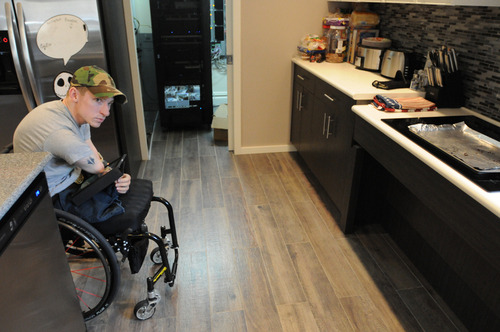
After I got back from that war—the one that was to set the Middle East ablaze with freedom and democracy–I sat around a lot. I was half a man and so I couldn’t walk anywhere—couldn’t jump in a car and drive to the ocean to smell the sea’s briny air. I couldn’t do anything at the spur of the moment. Going somewhere took real planning and a lot of physical work. 

First, I had to roll myself on my wheelchair. (I named it Rusty.) I rolled it down to the latrine. I had to hoist myself up and onto my special seat and empty everything out of me. Then I had to roll over to my bedroom and hoist myself up onto my bed and change out of my pajamas. Originally, I forgot that I couldn’t change out of my pajamas if I didn’t have a fresh set of clothes (pant legs cut off) in my hands or at an arm’s reach away from my bed. I would mumble all the swear words that the Marine Corps taught me as I re-hoisted myself back onto Rusty and wheeled myself over to my dresser. A few months later, I figured that I could get around in my little room without the use of Rusty. I’d just drop down to the floor and crawl over to my dresser. I got pretty good at crawling. (My forearms, pectorals, and triceps are nothing but gorged veins and taught muscle tissue.) I look like one of those crustaceans crawling around on the beach that I used to go to. These days (these dark days), crawling reminds me of boot camp more than the beach—having to duck under menacing strands of barbed wire while getting my face pushed in by that wife-beating Drill Instructor of mine. Things evolved more: My crawling turned into hopping—which I now do. I hop around my house. I leave Rusty near the door to use only on the rare occasions when I’m going somewhere where the wind blows and the sun shines.

It still takes me a long time to go somewhere, though.

So I sit around a lot. A few half-dead Korean vets from the V.F.W. came over one day and gave me an old, donated computer and a few video games which I play from time to time. A press man accompanied them and took some pictures and then they all filed out my door. They also gave me a few donated books, but those are mostly about running, soccer, or some other ambulatory adventure. One day, I tried giving the Bible a try. It was the New American version and was Uncle Mark’s homecoming present to me. It was black and shiny; it smelled like the insides of a stationary store. Uncle Mark had my name stitched on the cover in cursive letters. 

When I read it, I made it as far as Genesis 11. God destroyed the tower of Babel and scattered the world, forcing its inhabitants speak to each other in indecipherable tongues. I think in Chapters 12 or 13, the book takes one of its strange turns where some person begets some person who begets someone who begets someone else etc. The day that I got to that tedious part, I had drunk a lot of whiskey and remember my mind thinking stupid thoughts. My head couldn’t keep all of them inside. From that moment on, my mind took charge and started ordering parts of my body around. It told my arm to go get some paper and to write important things down. I hopped off my bed and crawled to my dresser. (I was good at following orders; I was programmed to be that way in the Marines.) I got my journal and my plastic pen (I’d gnawed it really bad at its end.) and got myself back up on my bed. 

My mind screamed: “Write this down!” 

My arm said, “Yes Sir, but slow down, please.”

Mind: “Hurry! It’s eluding me!”

Arm: “I’m climbing the bed—almost ready, Sir.”

Mind: “It’s nearly gone! The language is changing; the tongues can’t be interpreted—they are beginning to sound like gibberish.”

Arm: “Whiskey first sir—gotta grab it. You’re telling me to.”

Mind: “Nearly gone!”

Arm: “Just following your order, sir: ready to write now.”

I wrote this down in my journal: “Joe and Betty begat Sally; Sally grew up and became a whore; Sally drank whiskey and fooled around one night with a sailor in San Francisco; sailor disappeared and nine months later, Sally begat me, Wes Jenkins.”

Mind: “Why are you stopping? There’s more!”

Arm: “But it’s you who are telling me to take another drink, Sir?”

After that swig, I laughed hysterically and put the gnawed pen down. 

“Don’t!” my mind screamed.

Stumps-for-legs: “C’mon, give it a shot! Are you a man or a mouse?”

Arms and mind together: “I’m half a man.”

I pulled myself up and spun my legs around—trying to see if my strong arms could make my torso turn a full 360 degrees. I couldn’t do it—not even making it 180 degrees. I had challenged myself and had failed. I sobbed.

“Failure! Failure! Failure!” I wrote in large letters in my journal.

Then I continued writing what my mind told me to write: “Wes begat nobody; he was sent to Babylon—in the middle of the Sunni Triangle. He got blown up and now he’s back. His tower fell and now he don’t understand nothing. He’s half a man.” I wrote again in all caps, “HALF A MAN.” And then I underlined it.

Mind: “magnifique!”

Arms: “Let’s give it another try: 200 degrees this time.”

I shut my journal and tried to spin myself again: only 120 degrees! Again: 130 degrees! On my third attempt, I fell off my bed and hit my head on the dresser. When I awoke, Uncle Mark was knelt down beside me feeling my head—his large crucifix beat against my bare chest, ticking off seconds like a grandfather clock’s pendulum. Christ in crucified form was cold as ice. The Son of Man’s body was as dead as mine.

I tried to hoist myself up, but Uncle Mark stopped me. “Stay down Wes. Stay down,” he said pinning my arms with his big hands. Remember: I told you I was strong and so I broke his grip.

“Lemme up!” I screamed.

“Stay down. You had a rough night again.” 

I hoisted myself up on the floor and reached to get up on my bed. Uncle Mark picked me up and put me down on it.

“Looks like you were at least finding Jesus in your drunken stupor,” he said as he picked up my open Bible that had been sitting on the bed.

I shrugged.

”Did you find Him?” 

I shrugged again.

Uncle Mark licked his thumb, touched his crucifix, and thumbed a few of the Bible’s pages. He said, “You’ve had this thing for five months and you’ve only made it to Genesis 12? So you haven’t found Jesus yet. Good God Wes, you haven’t even found Father Abraham.”

“Found Babel,” I said.

Uncle Mark licked his thumb again and searched in my Bible—navigating through it like a ship plying familiar seas—until he got where he wanted. He pointed his index finger and tapped it loudly on the page containing the verse he was looking for. “Here. Read this one,” he said proudly. “It’s about the Son of Man.”

Uncle Mark was pointing to some chapter in the gospel of Mark—his namesake. 

“Maybe some other time,” I said while gazing out my window. I had caught sight of a sparrow on a tree.

“Maybe some other time you say? When is ‘some other time?’ How much longer are you going to delay getting to know Jesus, Wes?”

“Dunno—not today though.” (The sparrow was preening itself.)

“You’re going to die, Wes.”

I looked at the sparrow and nodded.

“You’re going to die a stranger to Christ.”

The sparrow flew away.

“Do you know why I came here tonight?”

“Must be Sunday.”

“Yes it is. Today is the Sabbath—maybe had you gotten to Leviticus, you’d know that God ordered us to keep holy this day. He commanded it, Wes.”

“Must be five o’clock.”

“Yes it’s around that time.”

“Must be time to take me to confession and then sit in Mass and take communion.”

Uncle Mark closed the Bible and scooped me up. He took me over to my dresser and put me down on top of it. I looked like a puppet. “Yes: You can’t receive the body of Christ without receiving absolution for your sins. You can’t receive absolution for your sins while wearing these horrible rags,” he said, pointing at my pajamas. He riffled through my dresser drawers and found a pair of designer jeans. (Please don’t forget to imagine them with their legs missing; it’s important that you remember that designer jeans aren’t designer if they’re cut in half.) “These look clean,” he mumbled, sliding them onto me.
I lay there on the table looking up at him like a baby would. I stared at his dangling crucifix and counted the number of times it swung back and forth (13). While I counted, I wondered if I did the same thing when my momma wiped me. I wonder how I passed time back then, back before I could speak—back when my legs were attached to my body and were lifted up over my head when it was time to clean me up and dress me to go outside.

Rusty sat over by the door. After he had dressed me, Uncle Mark set me onto it and then wheeled me to the bathroom. He put me in front of the mirror and let me look at myself while he wetted his hands and combed my hair. He parted my hair to the side. I looked like a wax figurine. 

My mind barked: “You aren’t a paraplegic!”

Stumps-for-legs: “Yeah. What are you doing? Grab that comb from him.”

I tore the comb out of Uncle Mark’s hands and threw it. It flew down the hallway and skidded to a halt against the front door of my apartment. I messed up my hair and wheeled myself out of the bathroom. “I ain’t going!” I screamed. I was bold to fight Uncle 

Mark like that.

Uncle Mark put himself between me and the door. His booted foot came to a rest against Rusty’s wheel. “Don’t tell me you’re going to pull this kind of stunt again, Wes. I’m here to take you to confession and Mass and that’s that.”

“Ain’t goin,” I said stubbornly crossing my arms.

Uncle Mark crossed his arms in reply. We mirrored of each other (except he had legs): “Remember our deal?” he asked with one of his eyebrows cocked.

Mind: “Remember the deal, Wes.”

The deal, the deal, the deal—oh how I hated remembering the deal. 

Arms: “No sir. Unfold and hit him! You are strong!”

Mind: “Wes, you gotta remember the deal. Uncle Mark pays your rent. He buys you bags of popcorn and peanuts; he fills your
propane tank; he even rents you a new video game once in a while. And hell, how can you forget: He drives you to Frank’s Lounge if you’ve been good! Remember Vicky V? Remember the deal; you do it for the deal. Yes.” 

I gave up. “Alright, let’s go,” I said letting out a big, sour sigh.

Uncle Mark pointed at the bathroom. “Wheel yourself back in there and comb your hair the way it’s supposed to be combed at church. You know better.”

I sighed and pushed Rusty into the bathroom; I straightened my hair and parted it to the side. I even buttoned the top button of my collared shirt. I looked at myself and spit at the mirror. Uncle Mark didn’t see me do that. He just saw my top button buttoned; he paid me a compliment; he said that a bit of discomfort on my behalf would make Jesus proud. I was on my way to
Jesus looking like a champ.

Uncle Mark held the door open for me and I wheeled Rusty into the night. I remember that was raining bad that night—remember thinking that Rusty was going to get rustier in that weather. Uncle Mark made me wait outside his van while he worked the wheelchair elevator from the dry inside of his driver’s seat. My hair became messy again. My cheap outfit got soaked. I shivered and shuddered. The van’s elevator came down slowly—creaking like the joints of an old man.
“Push yourself in,” Uncle Mark ordered. He was sitting in the driver’s seat.
I pushed myself in.

“Close the door.”

I wheeled around inside the van and closed it.

“Turn around.” 

I turned Rusty around.

“Comb your hair.”

Arms: “Don’t comb your hair.”

Mind: “Remember the deal.”

Arms: “Yes sir—the deal.” 

I combed my hair.

Uncle Mark didn’t secure my wheelchair (on purpose). He was an awful driver when he was in a rush and so I had to brace myself a couple of times as we negotiated sloppy fast turns on those wet streets. His windshield wipers were missing their rubber gaskets; they scraped loudly against the van’s windshield. The screeching noise hurt my ears and reminded me of the chopper blades on the MedEvac that took me out of Babylon.

Uncle Mark hummed a hymn while he drove. I wiped a layer of condensation from the window with the sleeves of my collared shirt and stared outside. Along the sidewalks, people ran under the eaves of roofs and hurried into parked cars to shelter themselves from the storm’s onslaught. We didn’t get much rain in these parts: This was unusual.
Uncle Mark stopped his humming and turned his head to ask me a question: “All this rain makes me think: When you made it to Genesis 12, did you read Genesis 6? Did you read about Noah? Do you remember what the Lord said in that chapter?
I was silent; I ignored him, rubbing my index finger along the foggy windshield. I traced out the word “Silence.” Drips of water ran down the letters in long, straight lines. Neither arms nor mind said anything which was a good thing. I was thirsty for a nice shot of whiskey. I imagined all that water outside was whiskey. I wanted to get out of Uncle Mark’s van and throw myself into the gutters—drinking it all up like a thirsty pig at a trough on a sultry day.

Uncle Mark pulled the van over abruptly. I was caught by surprise and reached out to grab the plastic, oval-shaped handle above the van’s door: I missed it. Rusty took me down the length of the van and I slammed into the back of the passenger’s seat with a crash. 

Uncle Mark turned around in his seat and glared at me; he was really upset; I could tell, because the veins on his temples were throbbing. “You don’t remember do you? You didn’t read it. You’ve been lying to me, Wes.”
Mind: “Remember the deal; remember the deal. Be calm; be calm.”

“I’m sorry, I don’t remember,” I offered.

Uncle Mark cleared his throat. The van’s hazard lights were on; their clicking marked time with his response. “The Lord said: ‘I will wipe out from the earth the men whom I have created, and not only the men, but also the beasts and the creeping things and the birds of the air, for I am sorry that I made them.’” He turned back around and slammed the van into gear, pulling it back onto the road. 

I rolled myself down to the window in the back and held on to that oval handle.
We were a bit late for confession. Pious women in the church’s parking lot were running fast—shielding themselves from the rain using their leather purses. Men had thrown their hoods up over their heads. Their kids jumped over puddles. These families were rushing inside to tell sequestered priests their sins.

Uncle Mark yelled “Hurry up!” as he operated the van’s elevator. I rolled onto it and rode it down. Its gears ground and squeaked. Uncle Mark pushed me from the saturated parking lot, up the handicapped ramp, and into the bowels of Saint Sebastian’s Church. He stopped us inside and doused his hands in holy water, as if he was washing himself in a basin of hot water. He made the sign of the cross and then lathered me up with the holy water like he was getting ready to shave me.
Into the nave we went. The church was mostly empty. Those parishioners we saw in the parking lot were already inside the telephone booth-looking confessionals making their calls to God. Saint Sebastian’s was dimly lit. Uncle Mark once told me that the church dated back to the 19th Century. Long lights hung down from the ceiling. Candles flickered. Paintings of martyred saints gazed down upon us—pierced, burned, skewered. None of them were missing their legs.
That was me.

Rusty’s wheels didn’t hold up too well on the church’s slate floors. They weren’t quiet; they clacked and squealed—more that usually since it had been raining. A few people–lost in prayer with Rosary beads dangling from their hands–found their bearings by gazing upon us as we moved past the transept on our way to the very front of the church; the place where the devout wore the kneelers’ wood smooth day after day. Uncle Mark made eye contact with a few of them; I looked down and put my head in my hands. As we drew near to the little booths, we could hear the muffled noise of people in various stages of confession. Some people just started; others were being given their penance.

There wasn’t much privacy in this church. The rain pattered on the roof.

“Forgive me father for I have sinned,” came out of one of the confessionals.

“I have lied to my wife; I’ve cursed at my kids,” came out of another.

“Amen,” came out of a third confessional.

The fourth was silent. It came to life a few seconds later. Someone was crying. Uncle Mark parked me in front of this one. He locked Rusty’s wheels and came to his knees beside me on the hard floor. He made the sign of the cross, clasped his hands, and bowed his head. 

“Pray. Pray!” he told me.

I sat in Rusty’s plastic seat and looked around. We were on the right side of the altar; a clean-cut boy clad in a white cassock lit candles that had been placed on either end of it. Behind the altar sat the priest’s seat: a velveteen throne-looking chair with a high back. To the left of the priest’s seat were two flags: the Vatican’s (with Saint Peter’s keys to heaven exposed for full viewing) and Old Glory. The American flag’s finial was a proud golden eagle; its talons held sharpened arrows.
“Pray. Pray,” whispered Uncle Mark as if he were feeding me my lines to a cheap theatrical production.

I stared at the eagle and the sharp talons.

From the confessional in front of me came the whispers of the priest giving his absolution. We heard more sobs and then the curtain opened. An old man with a full, silver head of hair appeared. He wiped his eyes and reached for his cane that was leaning against the booth’s wooden wall. As he limped past me, he looked down and nodded approvingly.
“Get ready,” whispered Uncle Mark standing up and unlocking Rusty’s wheels.

Mind: “Get ready arms!”

Arms: “Sir, permission to speak.”

Mind: “Shh: No time to talk. Push! Remember the deal.”

My arms pushed Rusty forward towards the confessional.
Uncle Mark came to my side and gave me my orders. “Confess your sins, Wes. Tell God everything!” he said.
I pushed Rusty.

“Tell Him about your alcoholism.”

I pushed closer to the booth.

“Tell Him about Vicky V.”

I pushed.

“Tell Him about the war!”

I stopped; I turned in my seat and stared up at Uncle Mark. How could I tell him about the war? How could I tell anyone about what happened over there?

Mind: ‘Remember the deal!”

Uncle Mark: “Remember the deal. Go in there and make God proud!”

I couldn’t enter the confessional; Rusty didn’t fit.

“Go, go, go!” urged Uncle Mark.

I jumped out of Rusty and onto the cold church floor. I crawled; then I hopped, as if I were in my little bedroom at home. Some of the devout in the front pews saw me. The clean-cut altar boy stared. I was quite a sight for the clean-cut crowd: the token vet with the missing limbs. 

With one of my strong arms I slid open the confessional’s curtain. Towering above me was a wooden seat; above that was a small mesh screen. I couldn’t hop onto it. I sat on the confessional’s cold floor.
Uncle Mark’s head appeared from behind the curtain. “Speak, speak, speak!” he said.

A voice spoke from behind the mesh screen said, “In the name of the Father and the Son and the Holy Spirit.”
My hands remained still; they held me up.

Uncle Mark grabbed them. He forced me to bless myself; he placed his hands over mine; he made me do it—that bastard.

Arms: “Fight! Fight!”

Mind: “Remember the deal.”

A voice spoke again from behind the mesh screen: “What are your sins?”

“Tell them!”

From behind the mesh came again: “What me your sins?”

“Tell them, tell them!” said Uncle Mark excitedly. 

I hopped closer to the screen and put my hands up to the kneeler that was flush against the wooden wall that held the mesh screen. The priest was close to me; I could almost feel him behind the wall. I smelled his stale breath: He had held his tongue in his mouth for the greater part of the day—had said few Masses, had counseled few people. His halitosis was reserved for me alone that night.

I pulled myself up on the kneeler and hesitated—my cheekbone was flush with the wire mesh; it hurt. I was hemmed in: Uncle Mark was behind me I had nowhere to go. I couldn’t retreat. The armies had me enveloped.

“Tell!”

Silence.

“Tell!”

I said nothing.

The priest baited me with something Christ-like: “Be not afraid: The Lord forgives everything—all sins; you can speak freely, son.”
Uncle Mark put his hand into the confessional; and pushed on my shoulder blade. I didn’t expect this: My head banged into the wooden wall. “Say it!” he said.

“Goddamn disgrace,” I whispered to the priest.

Arms: “Leave!”

My mind was silent.

I did a 180-degree turn and pushed Uncle Mark out of my way. I must remind you that I am very strong. Though he thinks he’s a strong man—a big-time construction foreman of a big-time construction firm—Uncle Mark’s really nothing. He’s a weak person. He flew into the wall of the confessional. 

I found my way to Rusty and climbed aboard. Uncle Mark got himself up and rushed to my side.

“Did you tell; did you tell?”

“Yes,’ I said, lying.

“Good, good!”

“And what was your penance?”

“100 Hail Marys,” I said, lying again.

“Good. That’s a hefty sum, but you can achieve it.”

“Yes.”

“You will say them now. You must.”

“Yes.”

Uncle Mark wheeled me to the front of a plaster statue of Mary. She was to the left of the altar. She was stepping on snakes that slithered across a bluish globe. I looked at her—at the cracks in her head. She’d been there for a hundred years. A lot of devotions had been made to her—votive candles had been lit. Generations worshiping her had come and gone, but she stayed. She was all cracked and disfigured. A snake’s forked tongue was right up against my nose; its sinister-looking eyes met mine.

“Begin!” Uncle Mark hissed.

I began the monotonous prayer: “Hail Mary full of grace…”

“Again!”

I said many of them. After I finished one and began to start the next, Uncle Mark snapped his fingers. About 10 minutes passed.
Before I could say another, a bell pealed in the rear of the church. A woman walked up beside me and genuflected before the altar; she got up and walked to the front of a wooden lectern. “Please stand and greet our celebrant, Father Harvey,” she said.
The congregation stood. Uncle Mark stood. He wheeled me back over to the first pew. “Sit up straight,” he said into my ear.
I arched my back as stiff as I could. I was remembering the deal; it was coming soon.
Father Harvey was an old man; his shoulders were stooped; it was as if sack of concrete had been thrown upon them. He shouldered this imaginary load miserably. A young acolyte clad in an ill-fitting cassock and carrying a withered Christ impaled on a cross led the procession. The woman led us in song. Father Harvey limped and bobbed. He peered up occasionally from his burden to look at the congregation. 

“Sing! Sing!” came from behind me.

I didn’t sing. I moved my lips.

Uncle Mark rushed to my side and turned my wheelchair to face him. “You will sing!” 

I sang: “Let there be peace on earth and let it begin with me…”

Father Harvey passed the transept. 

“…Let me walk with my brother, in perfect harmony…”

Father Harvey made eye contact with me.

A stage whisper filled my ears: “Nod your head and acknowledge him!”

I nodded.

Father Harvey appeared to be too buried under the hump of his back to see me. He came to the altar and tried to kneel. An acolyte (not the one carrying the withered Christ) caught his elbow. He curtseyed and mounted the altar like a drunken man. A few folds of his alb got stuck under his shoes—nearly tripping him up completely.

Then came his blessing (his arms shook);

Then came the readings (the first reading was about water; the second was about faith; and the Gospel was about Jesus walking on the water). Father Harvey gave his homily while seated on his large throne with velvet padding. He fumbled with his microphone for a few seconds. The congregation was silent. Above him was an electric light; it hung down from a long chain and shone brightly on his pale face. It made his wrinkles look like enormous canyons. He spoke to us, but his lips weren’t visible. He said very little, he was so old.

Uncle Mark gave me a break until the Profession of Faith; then he formed his hands into a knife-like edge and thrust them into my ribs. “Say it!” he said.

And then the collection basket was put in front of us.

Uncle Mark thrust money into my hand. “Give! Give!” he told me.
I put the money in: The basket was withdrawn. A second collection was announced. I gave again.
Then Father Harvey stood—teetering. He broke the bread and consecrated the Eucharist. An acolyte rang the bell which symbolized the precise moment when Jesus took form in that raised, shaking wafer.

“Believe! Believe!”

The bells rang again.

Father Harvey was supposed to genuflect after the bells silenced, but he couldn’t. His knees creaked. He swaggered like I did when I had too much whiskey. Communion was doled out and distributed by the stewards of the church: three clean-cut men in suits. Since we were in front, we got fed last. I think there’s a verse about the last being first in the Bible. I don’t know if Uncle Mark knows that one, else he’d have wheeled us to the back before communion started.
When it was our turn, Uncle Mark nudged me. Father Harvey tried to walk over and give me a wafer, but couldn’t. With the body of Christ held in between his shriveled fingers, he motioned one of the other Eucharistic ministers to come over and feed me. 

“Serve this man,” Father Harvey said.

“On your knees!” Uncle Mark hissed.

I hopped off Rusty. Warm stumps met cold slate.

“Bow!”

I bowed and then a wafer was put in my mouth. I bit down on it; my saliva reduced the unleavened body of Christ to a soggy, sponge-like substance. I turned to get myself back up on my wheelchair; a Eucharistic minister tried to help me.

“He will do it,” said Uncle Mark.

“I can do it,” I said stubbornly. But I slipped and fell back down to the cold floor.
My mind flew into a rage: “What was that?” it screamed at my arms. “I thought you were strong?”

The Eucharistic minister placed his chalice down on the altar and bent down to pick me up.

“He will do it on his own.” Uncle Mark said.

The congregation watched me struggle. Even the organist paused playing while I fought to remount trusty Rusty. My arms gave out a third time—unlocking; soggy and limp like the last traces of that wafer in the back of my mouth. Back to the floor of the church I went.

The Eucharistic minister bent down again; it pained him to see me struggle like that. Uncle Mark held the minister back with his big hands.

“He will do it, I said. Let him do it on his own.”

“Help that man,” commanded Father Harvey from atop his padded throne.
Uncle Mark heeded the old priest’s order and let the Eucharistic Minister pick me up and place me on back on Rusty. Uncle Mark only listened to people in authority—especially priests.

Mind: “What is going on? You are ruining the deal! I’m thirsty”

Arms: “We are tired.”

Father Harvey stood and raised his hands–proclaiming that mass had ended and that we could go in peace; that we could love and serve the Lord.

Mind: “WAR!”

Father Harvey shuffled down the nave as slowly as he entered it. The congregation behind us filed out. We were the last ones; we were left sitting in the church. We sat there for a long time. The altar servers came and blew out the candles; a few moments later they reappeared in their street clothes and turned out the electric lights above us.
“You made a scene tonight,” Uncle Mark said. He faced forward when he spoke, not looking me in the eye. I could see his weathered face illuminated by the flickering of the votive candles. “You did it on purpose—to draw attention to your pathetic situation.”

“What about the deal?” I asked.

“You have shamed us; you have let us down. I don’t know.”

“What about the deal?” I repeated. My mind was screaming. My hands shook. I needed whiskey; I needed Vicky V.

“God especially: You let him down.”

“And the deal?”

“You did this in God’s house of all places.”

Arms: “Hit him!”

Mind: “The deal! The deal!”

“You know that you should refuse help. You must depend on God alone for mercy and support, Wes. You know that: You know that you are to mirror the suffering Christ.”

“Yes. And the deal?” 

Uncle Mark turned and looked at me. His eyes were wide; the church’s candles could be seen in his pupils. “You must confess this act of vanity, you know.”

I lied. “I will—next week,” I told him. I would tell him anything he wanted at that point; it had been a long time since I’d had whiskey on my lips

Uncle Mark faced forward again. He gripped the large crucifix around his neck and mumbled some inaudible prayers.
“And the deal?”

“Silence!” 

We sat there for a very long time. The last few cars outside in the parking lot drove off; the church was silent except for the pattering of the rain on the large roof.

Mind: “The deal! The deal!”

Arms: “Kill him!”

Mind: “Ask him about the deal! Beg for the deal!”

Arms: Break his neck; reach out and snap it. We are strong.”

Mind: “Silence! Beg for it.”

Uncle Mark broke the silence. “Are you ready now?”
I had to know and so I asked again. This time I begged. “Please Uncle Mark: what about the deal?”
Uncle Mark smiled. “Have you learned your lesson tonight, Wes?”

I didn’t even need to think before I answered him. He could have asked me anything and I would have given him the same answer: “Yes!”

“Have you prayed about it?”

“Yes!”

“Good. Will you confess this?”

“Yes! Yes!”

“Good. Then I will take you there tonight, Wes,” he said. He stood up and exited the pew, genuflecting and crossing himself piously. Then he pushed me down the aisle. Rusty squeaked and clanged as it rolled across the slate slabs.

Mind: “Hallelujah!” 

A figure was sitting in the last pew of the church. It was so dark that we didn’t see it. We only heard it. It was Father Harvey. His dry voice made Uncle Mark jump as if he’d heard the Holy Ghost—causing him to nearly spill me out onto the hard floor. 

“Gentlemen,” he said.

Uncle Mark righted me and Rusty. “G-g-g-goodnight, Father Harvey,” he stuttered.

“Please, come closer gentleman,’ Father Harvey said, beckoning us with an outstretched finger.

Uncle Mark wheeled me over to him. (Remember, he was obsequious to priests.)

Father Harvey struggled to rise from his seat. Uncle Mark gripped the old priest’s elbow to help him up.
“I don’t think I gave you absolution young man,” Father Harvey said, pointing at me. “You were at confession tonight weren’t you?”

Uncle Mark spoke for me. “Yes. He went. And no: I don’t think you did, Father, but he has started on his penance.”
“Well then, bow your head son,” Father Harvey commanded.

Mind: “Oh hurry! Hurry! The deal! The deal!”

I bowed my head.

Father Harvey mumbled a prayer; I wasn’t listening to him so I don’t know what he said while he moved his shaking hands above my head. All I remember is what he told me after the prayer. After he made the final sign of the cross over me, he bent down and said audibly, “And now I will seal you with the Holy Spirit by breathing it into your ear.”

“Amen,” I said.

It had been Father Harvey who was in the confessional that night; his breath gave him away. I smelled it when he whispered in my ear. He said, “COME SEE ME SON. COME WHEN YOU ARE SAFE TO COME,” he said.

“Amen,” I said again.

“Thank you father,” Uncle Mark said unaware that he was being betrayed.

“My pleasure, gentlemen,” Father Harvey said as he struggled to sit back down in the pew. (Uncle Mark helped him again by holding his elbow.)

Uncle Mark wheeled me out the door and down the ramp of Saint Sebastian’s Church. “Never leave the confessional without absolution,” he reminded me. “Don’t do that again.”

“I won’t,” I said. 

Uncle Mark wasn’t in a hurry now that he’d been to Mass. He leaned against the van’s door while he operated its elevator. He even belted me in (checking to make sure I was safe) and made some small talk for the first time that night. “They say this storm front is supposed to clear out tonight; cold weather’s on the way,” he said.
He drove me a few miles down the road: to Frank’s Lounge. He wheeled me right up to the bar and ordered me a double shot of whiskey. 

John was tending the bar that night. “Same deal with Wes tonight Mark?” John asked as he pointed at me.
“Same deal John,” Uncle Mark said slapping a fifty dollar bill down on the bar.

Mind: “The deal! The deal!”

John scooped up the money and poured me my first shot. “What time you picking him up?” he asked Uncle Mark as he slid the shot glass into my quivering hand.

“We’re cutting Wes’ play time short tonight. He was a bad boy in church,” Uncle Mark said chuckling. “Eleven.”

Mind: “Eleven? Did he say eleven?”

Arms: “Kill him!”

Mind: “Shut up and drink.”

I slammed down my first shot. I licked my lips and ordered another. John obliged.

“Slow down Wes,” Fifty dollars ain’t going to get you past nine,” Uncle Mark warned.

John winked at Uncle Mark. “Is he getting a turn with Vicky V too?” he asked.

“Not tonight.”

Mind: “Of course, I was a bad boy.”

“He was a bad boy, remember?” 

John nodded. “Right: Then I’ll call the cab at ten thirty.”

Uncle Mark nodded and slapped me on my back. My arms wanted to strangle him; my mind told me to be cool and to drink—to enjoy what I had. 

“Be a good boy, Wes. Don’t give Johnnie here a hard time; don’t beg him for more time or for a loan; don’t beg him for Vicky V; don’t give the cabbie a hard time, neither. Just behave.” Uncle Mark said.

“I will,” I said—lying.

“Goodnight Wes.”

I said nothing.

Uncle Mark left; I never saw him again.

That night was different than all other nights. I had made up my mind on the ride to Frank’s. I already knew what I was going to do. My mind didn’t tell me what to do; it didn’t come up with an idea for the first time since I got back from Babylon. It was refreshing—as liberating as liberating Baghdad itself.

I drank five shots in a row: bang, bang, bang, bang, bang. John tried to slow me down; waving his hands in my face and making throat-cutting gestures with his hands, but I told him to go die and to hurry the hell up. Chet, an old Vietnam vet, a regular at Franks who had those red, scaly fingers that a long-time alcoholic has, stumbled over to me. He tried to calm me down. (John enlisted Chet whenever I got especially angry and bitter.) The room spun. I was drunk. Without my legs, I had less space for the alcohol to go. I could catch a buzz like a 10 year-old kid.

“Go die Chet,” I said.

Chet was drunk like me. “Semper Fi. Once a Marine always a Marine!” he said with his arm around me, nearly squeezing me to death. He always said that to me. He loved Marines—especially legless ones like me. We drank a shot together and high-fived. He damn near kissed me on the lips.

“Another,” I commanded.

John poured a seventh shot. “Ok this is your last one Wes. You’re out of money. I’m calling the cab now,” he said.

I protested. “It’s only nine o’clock,” I said.

John made the throat-cutting gesture again while he spoke on the phone. “Hello, Bob’s taxi service? This is John over at Frank’s Lounge. I need a handicapped cab….”

Mind: “Do it!”

Arms: “Do it!”

“From the halls of Montezuma….” Chet crooned, squeezing me, smelling like grain alcohol.

My arms spun Rusty around; I faced it towards the door. Chet made a lazy swipe at me, but I brushed him off. John came across the bar—placing his hand on my large bicep. I was strong, I tell you. I crushed his hand, making him retract it and moan. And then I wheeled Rusty out the door. 

No one else in Frank’s Lounge tried to stop me; I had made my point. I was out of there in no time—out on the highway: Me and Rusty. There was so much water on the roads from the storm that I got thoroughly soaked pushing Rusty. Cars zipping by at 80 miles an hour splashed me—making me cold and shiver. No one stopped to ask if they could help; hardly a trace of a Good Samaritan in my freedom-loving town. I was on my own: I just had my united arms and mind to get me there: to that place.
The wind of an 18-wheeler passing me knocked Rusty over. My stumps became submerged in a puddle that was as cold as that church floor that I had been propped up on. It took me a long time to get them out of the mud. When I did get them out, they dripped like they did the day that my legs were blown off me. I got back up on Rusty and moved out.
After a mile of pushing, I felt the whiskey wearing off. Rusty seized up on a rock. I had to dislodge it using my old gnawed-on pen that I kept in the back of my pants. I had to hurry! My mind and arms were going to rebel; “the deal” was going to be summoned, turning me into a coward. I was aware for the first time that time itself was working against me! A white van suddenly passed me. I pictured a frenzied Uncle Mark hunched over behind his steering wheel, humming his Biblical hymns, looking for me like a crazed warden on the hunt for the escaped fugitive. I was ready to fight him; I was ready to die that night—more ready to die for THE CAUSE than I was when I was in Babylon fighting for freedom.

But it wasn’t him in that van. As I said before, I never saw him again. He’s exited from this story; thankfully.
I couldn’t believe it when I got there all bloodied up and dirty. It was like a dream; my ride there must have been five miles. Rusty hadn’t let me down. When I got there I knocked on the door—pounding it with my clenched fists. Nobody answered; I couldn’t hear anything. Everyone was asleep. I held that rock that had gotten stuck in Rusty a few miles back; I held it tighter than I’ve ever held anything in my life. I looked at the window on the second floor and calculated things.

Mind: “Stop! Stop!” What are you doing? Call Uncle Mark before it’s too late!”

Arms: “Throw it!”

I let the rock fly like that live grenade I once threw in Babylon. I lifted myself off Rusty and fell to the ground in front of it. I put my hands over my head—protecting my mind—my treasured brain–from the impending blast.

Mind: “Count to three!”

I counted to three out loud.

Mind: “Prepare for the explosion!”

I did!

The window crashed. A light came on. I heard grunts. Eventually, feet shuffled from behind the door. I heard someone walking down a creaky stairway very slowly. I groveled on the ground with my big arms outstretched. The door opened; I put my hands around the extended feet and kissed them profusely; I kissed them like I kissed my whiskey bottles; I kissed them like I kissed Vicky V in the room at Franky’s Lounge.

Then I looked up at the wrinkled face of Father Harvey.

He was too weak to pick me up—to old; to close to death. He held onto the rectory’s door for balance and bent down. He touched my arm with his extended finger. “I knew you’d come,” he said with a smile.

Yentas a Plenta 

It should come as no surprise that there’s no way in hell that I fit in where I live. I’m surrounded by a gaggle of yentas between thea ages of 50 and 103. I am one big ass sore thumb in an otherwise homogeneous neighborhood made up of happy people who wave to each other and gossip–at great length–while out walking the dog. Even their trash is homogeneous; its made up of boxes that contained mail-order possessive happiness, you know, the ‘comfort food’ of bored suburbanites: LL Bean dog beds mixed with Crate and Barrel candle kits mixed with whatever the hell comes from Pottery Barn that costs $10 more than it should.

My neighborhood is one big contrast–me versus the rest of the community: Their recyclables are silent: Mine are filled to the brim with Tecate bottles that ring and chink, sounding out my free-thinking, ‘enlightened’, jaded bachelorhood whenever the Mexicans dump them on my silent street at 4 a.m. The Mexicans have to think that I’m one of them–I’m supporting their economy to some degree, because if it’s not Tecate, it’s Dos Equis or maybe even Corona depending on the pay cycle and my own ‘comfort food’ impulsiveness. The Mexicans sure can brew beer better than that vapid scion of Adolph Coors. It typecasts me so early in the morning. I’m that single divorcee dude with a cute kid; I run a lot AND I drink a lot of beer. The former is spooky; the latter is, well, expected, so they suppose.

But I’m really not quite what the yentas expect. I’m close, but I’ve still got that running problem. I’m not where I’m supposed to be. There needs to be someone else more predictable in my place. The very fact that I can’t be figured out, pegged, stereotyped and sorted into a neat $55 Crate or Barrel of ’single divorcee loser’ has really got the yentas a’cacklin’. I mean I am the talk of McWorld; I am that guy who is single-handedly driving the property values down.

I don’t plant petunias in the front section of my ‘yard’ that serves as the object of an instant yenta diatribe if it’s not up to standard (these beds are the bragging rights of McWorld and mine is nothing but weeds and three year-old oxidized mulch); I don’t have those hanging bird feeders. (I have the bird feeder hanger from the previous owner, but nothing hangs from it except a dizzy spider and her little web that I like to leave alone.) I do have some magic ceramic frog that was left here. I don’t know what it means and so it just stays frozen like Lot’s wife, looking back at a dilapidated house that has been destroyed because its inhabitant has drifted from the mandates of THE Association Book Chapter Five, verses 3-9 (front lawn upkeep).

I don’t have a back deck that looks like something from Key West. My awning doesn’t jingle with fancy wind chimes. The birds don’t come to feed: They come to shit. I don’t have a swing and tiki torches where I am to contemplate what the Republicans will have to do to keep the Senate; I have two plastic ‘Adirondack-style’ chairs made in China and bought at K-Mart when times were really rough. I sit out there sans shirt with a beer and watch people with 50000x my income hit little white balls with $300 clubs while zooming around on plastic cars. I sometimes read out there. I’m not reading The Kite Runner crying because the National Geographic Afghan girl just stepped on a landmine; I’ve got Fear and Loating in Las Vegas in my hand laughing because the gonzo journalist high on a concoction of acid, pot, and amyl nitrate just ordered 5000 bars of soap, three hookers, a goat, and an ape up to his room. (And room service is going to try and pull it off!) Steaks don’t cook on my stainless-steel grill; hot dogs get re-warmed and re-rusted on my ramshackle BBQ with the leakly propane hose.

I don’ t decorate for X-mas or Halloween. I don’t have a blowup Santa riding a Harley that comes with a limited edition red/green lightbulb and its own air compressor. I don’t attend the association meetings; I haven’t the slightest idea what kind of power plays and Machiavellian intrigue are unfolding inside the walls of the association’s meeting house. I’m oblivious to the fact that a cabal has formed within the pool subcommittee with the intent of usurping power from Mr. Wiggins’*, its president and autocratic dictator. I wasn’t aware that the landscaping committee has planned to uproot all the sycamores along X Lane because they are ‘messy trees.’ I am barely a part of this place. I only enter with my work things and exit with my dog or my running shoes. I choose to be invisible and I don’t want to run for office or appear in the local gazette backslapping the overachieving Lion’s club scholarship semifinalist while sporting a shit-eating grin. Leave me alone. Thank you.

I don’t begrudge people for being themselves. Neighborhoods can be wonderful places and to each his or her own, really. If they want the santas and the fake ‘olden days lights’, it’s their house for Pete’s sake.

It’s the yenta factor that bothers me; it’s the women that peer through their shades at my comings and goings as if I’m one of the people from the movie ‘The Burbs.’ Anything done out of the ordinary is questioned during my mandatory small talk crucifixion when I am pinned between the neighbor’s petunia bed and the sidewalk with a sack of dogshit in hand. Yes I am single. No I don’t know who dropped that box off. Yes I date. Yes. No, not really. Yes. Maybe. Yes, that is Tecate. No it wasn’t a party; it was Friday. Good day.

I get pinned going to work and, worst of all, I get pinned–severely dehydrated and emaciated–with nothing but my shorts on after a 15-mile single on a 75-degree dew point day.

Yes, it was a run. It was threee miles. Yes that is far.

Good bye.
—————————————
I tried running on the golf course/private country club that is ten feet from my door for the first time yesterday. I hopped the fence like a criminal. Some cart far away started hauling ass towards me like that one part of GTA-Vice City where you have to knock over the bad guy in his cart and I so got spooked. I ran a strider and chickened out back across the fence. I’ll sneak back on there when the leaves fall and the Rush Limbaughs draped in those sleeveless sweater things wearing their Greg Norman fedoras are off doing their cold weather gentrified hobbies like fox hunting or indoor skeet shooting.

Tee-to-greens will happen, soon. Fall is on its way.
—————————————
*I am not making this up. I am told that this Mr.Wiggins (this is not his real name) is a control freak. The word on the street, according to the yentas, is that he’s being plotted against. From what I can tell of him, this is good for McWorld and good for society in general. Going to the pool is like going into Idi Amin’s Uganda. Every possible rule is enforced. Kids are yelled at for the slightest infraction. Adults get called over and browbeaten by an omnipresent Mr. Wiggins who’s there–wearing Teva sandals on his feet and a beach towel slung over his shoulder exposing chlorine-faded lines looking like a Roman senator’s Toga praetexta–to remind the plebians of their complete ignorance of the pool’s statutes. Us plebians can never keep up with Mr. Wiggins. He’s always one step ahead of us. Dont fuck with his pool. Tread lightly and for God’s sakes don’t run!

I side with the yentas here. I partake in this kind of gossip. When things are really bad, and I’m hemmed in good in the middle of dog walking no-man’s land being grilled about the goings on at my place, I change the subject to Mr.Wiggins. The yentas always pounce on him–discussing the courageous blue-haired cabal and its Julius Caesar-esque plot to take him down and restore order, to allow all of us the freedom to break those token rules at the pool. And so, before I know it, I’m released back to the sanctity of my insulated, unkempt fortress. It works every time.

You may think that I’m done discussing Mr. Wiggins but I’m not. He lives down the street and when he’s not at the pool disproving the titularity of the Pool Subcommittee Chairman position, he walks in the back of the townhouses –draped still in his Toga praetexta, flopping about in his Walmart brand knockoff Tevas–ensuring that our shared ‘greenways’ contain no wayward dogshit. He carries a clipboard and catalogs in fastidious detail all ‘back deck’ infractions. Those in turn get reported up the Imperial chain of command to the Empress who either issues a warning or a fine. The former goes to those with the petunia beds, the latter goes to the guy with the ceramic frog and the weeds. If you drive down property values and don’t actively partake in the yenta games or the decorating games….if you drink and run wedging the square peg of divorced bachelorhood into the round hole that is Pleasantville’s godnapplepie facade, you will be fined–hot damn, you will.

Mr. Wiggins also plays tennis with some miscreant guy, some sidekick guy with long, greasy hair and fanged teeth who comes and visits Mr.Wiggins from time-to-time. The miscreant guy, who I will call ‘Jake’, snickers all the time. He’s a real piece of work. I mean I have no idea where Wiggins dug this guy up. He looks like someone you’d see leaning on a counter of bowling alley at 3am arguing with the night shift manager for a refund on the Galaga machine. Jake wears black 1980s ‘Heavy Metal’ concert tee shirts (Whitesnake mostly) and black wrist sweatbands–he has a bit of sickly Kirk Hammett look to him, but he’s all bark and no bite. I mean he can’t even return most of Mr.Wiggins’ pathetic serves and when he does, by chance, make contact with the ball, he sends it so high up that Wiggins puffs out his bulbous chest (he’s a lumpy lardball) and slams the ball back down into Jake’s face. Of course Wiggins the dominant tennis player fits hand in glove with Wiggins the Imperial pool suzerain. By the way, Wiggins is a short man and so I’ll let you play Freud and connect those dots into a short conclusion.

The tennis courts are a perfect place for these guys to hang out because Mr.Wiggins gets to practice his serve there and observe the compliance of the pool’s rules at the same time. I forgot to mention that Mr.Wiggins is a fat male pig which means he gawks for uncomfortable periods of time at the bikini-clad lifeguard and her teenage friends who come to visit her. All these paragraphs should get you to understand why I avoid the pool, why I don’t play tennis and why I wait like an eager Plutarch to record his fall from power.

How to Crack the Vermont City Marathon brought to you by Stickenstone(TM) 

Since the dawn of man–since that time when humans migrated across the continents in their quest for food, shelter, and gold or other wordly treasure–man has been running. Man has run against man, and man has run against time –from Phippides’ pyrrhic peregrination to declare the victory on the bloody fields of Marathon to Pre’s pushing the pace on the second-to-last lap in those fateful 1972 Munich Olympics. (Now put in a bunch of big ass, out of place, pictures showing Shorter looking back, Pre in full 1970s hairy blossom, Bekele with large quads and #1 sign, and RitznWebb doing various RitznWebb things). (Continue on to write about cavemen and mammoths or sabre-tooth cats, ancient Greeks–lots of ancient Greek shit–and then migrate, ever so gingerly and delicately, to Arthur Newton then to Paavo Nurmi and the walking Finns of the 1920, slowly now to Lydiard with Snell, then Bowerman with hairy, inexorable Pre, then Shorter on his own with poofy hair and aquiline nose and then boom…RitznWebb, Gen-Y-altitude house-X-box360 breakroom fandango.) Finally, end with a tear about the lost boys. Boom. Pulitzer stuff baby. 

Chapter 2: Running History…..blah blah blah .

Chapter 3: The influence of running in the Movies. (put in Chariots of Fire picture as well as a picture of the movie Running Man– take up 2 pages with that) 

Chapter 4: The History of the Vermont City Marathon — a Tradition of Tolerance, Justice, and Multiculturalism.

For nearly 17 years, the Vermont City Marathon has been the crown jewel of Vermont marathons. Year after year, glorious weather and a happy, tolerant crowd have set the backdrop for the race which has been nothing but a vivid example of fierce, tolerating competition. One need look no further than the fine list of overall winners and top ten male finishers through the years to conclude that the Vermont City Marathon is one exciting race: Bob Hodge, Wejo, Mike Slinskey, Byrne Decker, Mike Wardian, Casey Moulton, Kevin Beck, a smattering of Skirack*FOOTNOTE elites, and Duncan “donut skip did dee doo dah” Larkin. (blah blah blah…go into the history of Vermont with some references to: Calvin Coolidge, Ben n’ Jerry, General Ethan Allen, Michael J. Fox’s palatial estate in Woodstock, and the filming of Me, Myself and Irene.)

Chapter 5, THE DAY BEFORE — Getting Ready for the VCM the Right Way. 

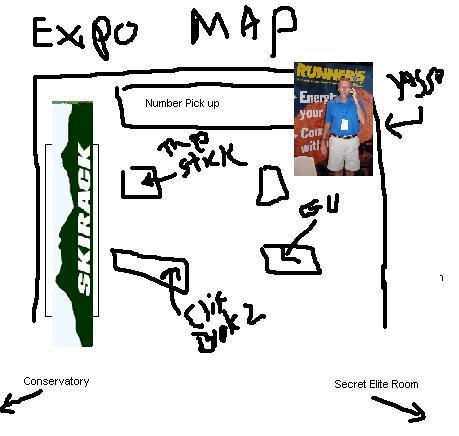
On the morning of April 14th, 1861, the streets of Vermont’s Queen City, Burlington, were awash in crazed people running everywhere, anxious to get the news out– some perhaps doing 6:00/miles on the very streets that you will be running down. The nation had been torn in two: Fort Sumter had been fired upon and Major Anderson had surrendered his tiny Union garrison to the newly formed Confederate Army under General Beauregard–rumored himself to have been a 16:00-5K man. When you arrive to Burlington in May of 20XX, you may very well see the streets awash in a similar hubub of activity, but this time it will be a celebratory, peaceful, multicultural one. This town doesn’t hold back. The first stop on your list the day before should be for a dainty lunch at one of Burlington’s finest eating establishments — Smokejacks! After a lunch of cheese and after experiencing a bit of a Chardonnary wine buzz, get in your car and drive up the hill to the Vermont City Marathon Sports and Fitness Expo. Located at the Sheraton Hotel on Williston Road, the Vermont City Marathon Expo is your place to pick up your bib as well as take in the fine vendors selling various running essentials. But before you go inside, you have to experience two things: 1. The kettle corn! Just outside the door, to your right is a booth for the best kettle corn west of the Winooski River. Stop for a quick bag; it’s good carb loading for that big race coming up. 2. The EMS kick ass vanagon. Located somewhere in the parking lot will be a huge, EMS green machine. This thing is the fruits of at least one year’s worth of marked up, overpriced revenues for Patagonia fleece (in ‘Save the Seals’ red and turbulent, ‘Magellan Strait’ dark blue). You have to climb the wall and high-five one of the EMS sales associates who, without a doubt will either be a very attractive woman in Chuck Taylors with Heidi hair, a bandanna, and a black tank top or a skinny, flying Tomato-type man with a red soulpatch who will be quick to use the word whisker, “stoked.” Once you’ve got your ‘corn and your shot of adrenaline porn, it’s time to step foot into the expo. For your convenience, I am providing you a map of the expo. My team of VCM researchers have went to great lengths to compile this map and I wish to thank them here (Joe R., Ron, and chim-chim). Peace out homies.

Probably the first thing you need to do at the expo is pick up your bib #. The bib, or race number as us elite runners like to refer to it as, dates back to the Pelopponesian Wars when Alcibiades, a disciple of Socrates and a brilliant orator and satirist in his own right, recommended that each member of the Athenian army wear numbers to mark their imminent death before their failed attack on the Sicilian city states. So go get yours and as you grab it, imagine yourself as Athenian private on an assault boat, on your way to lactic immorality under the onslaught of countless Sicilian arrows similar to Dog Red Beach, under MG-42 spray in that classic movie, “Saving Private Ryan.” Imagine the door to the ancient boat opening as you race, heart beating fast, head-on, into glory! You are an Athenian, you detest Sparta; down with Sparta and 4:00 marathons! Victory or death!

Now, open your eyes and take in the spectacle. Test your chip on the mat and while you are at it, shake Bart Yasso’s hand over on the right. Bart’s not there to shake your hand, but rather, in full temple worm, emaciated form, to hand out bibs to the secret elites.

The secret elites are a Templar group of sub 2:40 runners who think they are billy bad asses out to prove something to the world. One of them may very well be a satirical man who makes people cry and raise their pitchforks; he usually has nothing good to say. Avoid him.

But still look for the Templars. They will receive their bib, free dinner tickets, a genuine handshake from Yasso, and will be led down a secret staircase to a secret room where they are sequestered and given free Gatorade and a course run-down on butcher block paper before being led back upstairs for the symposium on how to be a billy bad ass sub 2:30 marathoner.

You should make an effort to attend the symposium. There you will see people like Peter Flemming show up late, and then complain to the elite coordinator, in Baby Huey fashion, about not being placed up on the dais next to Wardian. Trumped by Wardian! For shame, for bloody shame! He may even offer his hand like a dead fish. You never know! Go for it. Try to shake Flemming’s hand. Are you an Athenian or a Spartan?

After the symposium, make your way back into the main hall and visit some of the vendors. Be sure to purchase this book by Duncan ‘donut skip did dee doo dah’ Larkin, as well as some of da Clif Shot Blokz ™ and a ‘Stick.’™

Don’t forget as well to stop by Skirack’s booth. It’s on the left as you face Yasso. Say hi to the elite team as they stretch and drink water and be sure to check out their tents and John Masters limited edition Himalayan climbing boots ™.

Your last stop at the expo will probably be to check your chip one last time. I can’t state enough the need to check your chip! You don’t want this adventure to be for not. You gotta be counted, you gotta be remembered!

You should then head back down to Church Street for your evening. The street will be full of Burlington’s finest on a Saturday night and the whole wondrous scene cannot be missed! Look for the UVM dandies in their top hats and frock coats as they walk arm and arm with their fickle lovers singing beautiful ballads about crewing on the Winooski. You may even find the adorable UVM barbershop quartet, slicked back and clean cut, crooning that lovely UVM fight song, “Verdant Fields! Hear Ye my Glorious Mountains!”

Chapter 6. The Course — Ben n’ Jerry, Peace, Love, Justice, Taiko drums and that Bitch called Battery Hill at 16.

Note to self: tone down the satire. Ease up on the cynicism. Stick to the facts and pour on the Rick Steve ‘back door’ emotion. Put the readers on the course. By the time the sun rises over the hulking shoulders of Mount Mansfield, you will be standing on the starting line down in Battery Park. You will be surrounded by thousands of your peers most likely clad in garbage bags and disposable Hazmat suits. Off to your right, you will see grandstands where the announcer will attempt to rally the crowd into a frenzy. About ten minutes before start, a veritable who’s who of Vermont notables will grace you with their presence. Sure to appear will be the mayor of Burlington, Peter Clavelle. He’s got one hand on the hammer and the other on the sickle. He drives a Volvo and he saves the fucking whales. Brian Dubie will follow Pete. He’s the anti-Clavelle. He rallies the old guard of Vermonters –a flannel-clad cantankerous group of flag-waving, ‘good ole’ day’ curmudgeons who stoke wood stoves while bitching about the exodus of New York commies led by Comrade Representative Bernie “Ilyich” Sanders, their Moses. Dubie flies fighter jets and wears a Top Gun jacket. He crisply salutes the flag by the dawn’s early light. Everyone else on the podium looks around hoping that the independent, avante-garde newspaper paper, Seven Days doesn’t catch them in their moment of embarrassing patriotic vulnerability. The start commences promptly at 8:05am and you are off! Mike Wardian and Byrne Decker move to the front taking the early lead… Flemming gets pissed at the second dis…. (serious race strategy advice to follow) 

The first 3 miles — Turns and Tempered Times

Think of the first three miles as an urban adrenaline rush. You will be bolting down Pearl Street and then Willard Street carried on by the throng. If you aren’t careful, you’re first miles will be 10-30 seconds per mile faster than goal pace. Ease up here. Tell yourself to run slow and you will run probably your first mile about 5 seconds faster. In these first miles, you get a quaint tour of the nice houses around Burlington and will for sure see cute, enlightened kids sitting in Radio Flyers next to their liberal parents; they’ll all wave to you.

Ignore them.

Miles 4-8. Poop zone.

At mile 4 you leave the enlightened comfort of the scions of the Sierra Clubbers and head out into a vast mess that Burlingtonians refer to as the ‘Beltline.’ These miles are hard pavement out on a lonely road that borders putrid swamp and the “Intervale.” You get no cheers and will be lucky to see one or two stalwart supporters out there. General Ethan Allen put his house out here a long time ago, and since then, everyone else has decided to stay the hell away from it. You’ll intersect some underpasses where people play bongo drums but that’s pretty much about it. The highlight of this section is seeing the elite Templars as they clip along going the opposite direction. Flip them off. You turn around up a slight hill at 6 and usually turn around into the wind; be ready for this. 

Miles 9- 15.

Fast running past Dean’s house Mile 9 brings you back into the crowds. You’ll swing down Church Street hauling ass. A garage band with kids and zits is always right by the Old Navy store on your right. Wave to them. 

Miles 10 to 13 are all South of town. You’ll run down by Oakledge Park and past Howard Dean’s house. He likes to show up for the marathon and he will probably put on a puppet show for you–pretending that he is a common man from Vermont instead of that silver-spooned scion of a New York banker. He’ll probably have a wheelbarrow out and a LL Bean flannel shirt caked in fake garden mud for you too. Give him your best presidential bid-ending scream. The ½ marathon point is in Oakledge Park and get ready to smile for the camera, because as you come around the turn, the photo company will be there to take your visage. 

Mile 15-16, Taiko drums, Jean Luc Picard, and the Hill. 

As you get closer to mile 15, you’ll hear the hill. Battery Park Hill is about 300 meters at about 13%. Get ready for it. Hopefully you have saved some tokens for it. If all else fails, and you are dying, look for Jean Luc Picard. He’s this guy and is like the mac daddy kingpin of the Taiko gang that roams the streets of Burlington late at night; those bastards, always looking for someone or something to beat. 

Miles 17-22, The Death Zone. Without a doubt, this part of the marathon is the worst. All marathons begin to suck in these miles, and leave it to the VCM to lay in the most boring parts of the course during these miles. I don’t even know how to describe the course here. You weave in and out of housing areas; the tolerant, Caillou-watching Sierra Club kids from downtown devolve into blue collar, Cartoon Network ingrates who spit watermelon seeds at you. NASCAR stickers appear; you have left the green zone. Weave in and out…turn…turn…turn back…turn again…SUCK. Save it all for here. 

Miles 23-26.2 Cruise control. By mile 23, you are on the bike path that parallels Lake Champlain. Now is the time to cruise. Your legs are toast, but realize that it’s rolling, shaded downhill from here on out. The Queen City has returned and she is caressing your sweaty forehead telling you that all will be ok. She tolerates you. As a word of advice, you can run off the asphalt on a small gravel path to the right of the path — do this. Just at the finish, you will have to double back for the dreaded .2 mile slog. Get ready for this, because the inexperienced will think that they are done when they hear the crowd. You run a gauntlet of a crowd for this .2 and they will carry you into the finish. There you have it. The rest is predictable post marathon playbook — tin foil Zorro capes, disinterested teenagers snipping your chip off your shoe, and landfilling bottle after landfilling, petroleum-wasting bottle of fresh spring water. Oh, I forgot the landfilling hunk that is a finisher’s medal.

Ranger School Stories: Part One  

I ran the first eight miles today with Greg. We took the river trail which was a Congo expedition of sorts: we forded flooded, knee-deep sections of the trail and scattered clusters of newly hatched mosquitoes. The absolute worst sections of the trail went to waist-deep water; anytime I am moving through turbid, waist-deep water on a humid day, I am reminded of the swamp phase of Ranger School when I half expected to kick up a water moccasin’s nest at any moment. Brown water hides things; it hides those creatures that cause little bubbles to rise within arms reach of your quickly churning legs.
———————————-
Those black, rubbery, mean-as-hell snakes are nearby; keep going, move on, move on, lift the legs, lift the legs, got to set up a patrol base…..it’s getting dark….HALT! Take a knee! YOU Ranger…take a fucking knee. (whisper chain reaction started) Whispers catch up to me as Ranger buddy whispers in my ear, “SEND UP RANGER LARKIN.” I turn to tell the next guy to send up Ranger Larkin and then realize that I’m fucked. It’s my turn…. I churn up turbid water; I don’t care about water moccasins anymore. In fact, water moccasins, please swarm on me now? I’m more scared about what’s coming to me. 

I walk through the water and pass all the tired men taking a knee in the middle of the pond. A Ranger instructor(RI) sits under a tree Indian-style; it’s his Bodhi tree in the middle of Florida. He spits a torrent of brown tobacco liquid out of the side of his mouth. It’s the South, it’s the Army and so he squawks in a Georgia accent at me: “Rangea Larkin…the patrol leader has been relieved. You are in chaaarge now. You got one zero minutes to get your shit togetha. Undastand?” Spit. 

He pulls out a map. He spits again and licks the bits of tobacco up that didn’t make it to the ground–the bits that stick to the edge of his mouth–with his tongue. He’s got a small pine needle in his hand and thrusts it at me, “Where we at, Rangea Larkin? What is yo position?” 

I look around. I see tired men–hulking shadows–with green rucksacks and M-16s still taking a knee in the pools of water. It’s getting dark. I don’t know where the hell we are. When I’m under that kind of pressure, my mind races. The contour lines all come together: the draws become spurs: the valleys are the peaks; east becomes west, north down, south up. I wave the pine needle in a circle, almost trying to make magic and divine our location. I settle on a swamp near the RI’s thumb. 

The RI spits fast this time; no pieces of tobacco stick to his mouth, “Wrong! Holy SHIT! Congratulations Rangea Larkin, you were about five clicks off our actual location! Maybe someone else knows where we are?” The instructor pushes the map into my chest and stands up, wiping up the bits of the forest off of his camouflage pants. His Army issue soft cap is tight down on his head; the brim is folded neatly into a perfect U around his chiseled face; the Ranger tab on his hat and on his shoulder stand out in the setting sun. He looks disinterested off into the woods and sends me on my way without any eye contact, “I can tell this is going to be a very long fuckin’ patrol. You already on the verge of failing this here patrol, Rangea Larkin. You now got exactly five minutes to get yo shit together, else I’m going to call in an enemy artillery barrage and relieve yo ass!” It’s my turn to spit a little amount of tobacco now. It’s my only hope to salvage this abortion. I don’t chew tobacco, but I have to look the part; I have to be a Southern man in the Army to check this mysterious block in my life. It’s my response to his manliness; it’s my refusal to admit my own complete incompetence and to persevere and win, to suck it up and be an actor. 

So I look at the RI and tell him, “Roger, Sergeant.” I grab my rifle–chunks of Florida mud protrude out of its muzzle which is usually how I cared for all my equipment in the Army–and slog my way back through the murky water, kicking up swarms of mosquitoes and causing the strange things under the water to send up brown bubbles. I reach the point man and start the whispering chain reaction, “Send up the Platoon Sergeant. Pass the word that I’m in charge now.” The whispering starts, as the men start to move again: the metal clanking of the M-60 crew machine gun’s 50-pound cast iron tripods against their 10-pound traversing mechanisms resonate through the woods. 

More noises can be heard: the creaking of arthritic knees trying to stand up, the coughs of tired men–swigging water here, spitting tobacco there. Mosquitoes buzz up close; frogs croak all around us, and whippoorwills call out far away in the darkening forest signaling the coming night. Nature’s curtain hangs down over us, now. With darkness in this school comes uncertainty and ambivalence. Tired men want to lay their heads down on soft, dry sand and sleep. They don’t give a shit about what you did for them a week ago or that you gave them a piece of your oatmeal cookie bar because they were getting delirious. The moment is now, and the moment is man at his most exposed, raw, selfish state. 

Darkness in this school brings out red lens flashlights and ponchos. Leaders hover, like red phantoms under ponchos, and shoot desperate azimuths into the caverns of forest, making educated guesses at the easiest route to the objective. Light discipline is required. No one should see your red light. The enemy is out there, watching. If you flash light, the RIs go nuts and throw artillery simulators into the woods causing the entire platoon to get up and run with all their equipment for 500 meters. If you keep fucking up, you keep getting ’shelled’ which means your people hate you even more and grow tired of your incompetence pretty damn fast. 

And so the men wait for the leaders to take them to war. The ammo bearers–human mules in this dark comedy– slug OD green metal cartons of blank M-60 rounds for the machine gunners who balance 70 pounds of cold death slung around their necks like a mutant baby. The weight of these weapons and their accoutrement leave red marks around their necks which increase in size after 20 miles of walking under the hot sun. Their exposed skin cracks and blood begins to run. It mixes with sweat and forms upside down matchsticks which drip downward onto their dark, salt-caked uniforms. This confluence calls the mosquitoes that hover in squadrons above it all and descend, in turn, onto the men like JU-87s in 1939 Poland. The men are nothing but tired animals now. They rest their eyes and begin to snore. They nod off while on one knee, falling forward, face first; they are the apostles in the Garden of Gesthemene waiting for direction and hope–for an end to this insanity. 

They wait for their leader to lead. They are frail humans gripped by the unrelenting pressures of stronger forces and so they give in to everything. They are hopeless creatures–nothing but needy babies at their very worst. But you depend on them. It happens to be daylight savings time tonight. Of all the fucking nights to have daylight savings time, it happens to fall on the night that I have to take these 30 sleep-deprived, starving, cantankerous, self-absorbed Ranger students miles across the swamps and go raid some enemy headquarters where Ranger Instructors in doo rags and inside-out uniforms pose as General Noriegas and Che Gueveras for our five minutes of O.K. Corral action, in-between looking at porn mags and discussing all the wonderful extramarital affairs back on the base. 

The sun’s now just about down to the branches closest to the ground. It draws my shadow long, sending me all the way across the water–wrapping me around my new patrol. I’m on a knee and putting in a handful of Red Man Golden Blend into my mouth. My M-16 is cradled under my arms . It’s those long minutes between being a nobody and being in charge; it’s the middle ground; it’s purgatory. I can’t fail this patrol. I already recycled this final phase and so if I fail this patrol, I fail the whole fucking school–all four months of it. I go to Fort Bragg ‘tabless;’ I get ostracized by my new unit. I become a pariah in front of those with the tab. I become the Army equivalent of a leper. I postpone my wedding, I call home and tell my parents to cancel their trip. 

I stare once more into the turbid water and at the strange bubbles…… Greg looks over to me now; just a couple more feet and we will be out of this morass. We clear the water and pick back up to 6:50 pace squishing out water with each footfall–shedding these memories at an ever-increasing cadence. So I leave my memories at the brown pool and swing my arms and legs again down the river trail.
———————————–
Back in civilization, back at the Audubon market, the Indian man standing behind the counter was wearing an unseasonal Woolrich flannel shirt. He rubbed his gold pinky ring and wrapped his fingers around the gaudy opal centered in the middle of the ring, working them back and forth around the shiny edges of the stone, rubbing it like one would rub a nipple’s erectile tissue. He stared down at me holding about $50 worth of food: apples and oranges, bananas and pretzels, hard-boiled eggs and beef jerky nuggets, Gatorade and Boo Koo energy drink. He smiled and blurted out something in Hindustani to his wife as he grabbed my first item and wanded it against the red laser light making a fake ‘DING!’ sound. ‘Ding!’ (Hindustani) ‘Ding!’ (More Hindustani…faster cadence) ‘Ding!’ (Wife now, back at him…) ‘Ding!’ (Staccato Hindustani…back and forth now) Apparently I just made their day and they appeared to be making plans to shut down the shop and go walk along the Betzwood Trail. Life was good at the Audubon market; a malnourished runner during his Caveman week had fallen into their overpriced web. The opal brought them good luck.

Observations at a Homeless Shelter by Duncan Larkin  

I once read somewhere that the average American has the standard of living today afforded only to 16th Century kings.

One need not look far to affirm this theory; little King Henry VIII’s are at this moment seated in the back of their SUV coaches, plucking sections of chicken nuggets apart, slurping the kid’s supersize shake all to the backdrop of the Shrek 2 soundtrack in THX Surround Sound™.

But despite this gluttony of full refrigerators and 76-degree supercooled homes, our poor remain just as they were in the time of Christ or Charlemagne: They remain constant. And they remain ignored and shunned.

Last night, I got to spend ten hours with Danbury’s refuse. I thought it worth a blog shot. It promises to be a tad more enlightening than reading an assortment of the following words continually mixed and dressed a different way day in and day out: ”I”, “me”, “run”, “bells” “crunches”, “easy”, and “fever.”

The Dorothy Day shelter opens at 9 p.m. It’s located in the center of the city, but it has its own street that most of the city drives past-fast. When crossing the street, clumps of humanity are visible perched near cars, slumped on the side of a wall, or hooded massed with hands in pockets.

By the time I get there, a prim line has been formed and one of the shelter’s four volunteer coordinators are busy letting in the ‘guests.’ These coordinators are the saints of the operation. Without them, the shelter would never exist. These men (a mixed group of catholics, protestants, and agnostics) do everything from pay the bills for the shelter, to fix the heater, to give one of the guests a dollar to call home. At any moment, they are summoned to solve problems and serve humanity selflessly.

I’m just a volunteer with a small v. I come about once a month and spend one night. The four main volunteers spread their time in weekly buckets working one weekend a month.

I step into the light of the shelter and immediately hit with a pungent blast of sweat. It’s a sticky, salty smell–an odor of unkempt hair and hands immersed in the city’s dirty river of garbage.

I pause to say hi to J., the main volunteer for the evening who gives me a welcoming smile and a pat on the back. Working in tandem, J. logs the guest in and I note how long they have stayed with us. 30 days or more and they are sent away.

Peering over our glasses, we scribble down names count days and look up at our guests.

The thing that draws my attention time and time again is not the lack of teeth, dazed look, or oddly-placed comments. Instead, I am drawn to their hands. Fingernails are clumped and caked with dirt. Their beet red skin from years and years of living outside as well as the restricted flow of blood from all that alcohol shines under the fluorescent tubes of the shelter. Hands all contain cuts, gashes, and scrapes; I imagine these people slipping and falling in an endless tumble of pursuit from the cops, the dealer, or the abusive husband.

The last guest enters, the door shuts, and the smell crescendoes.

J. disappears to get the coffee pot for the morning.

He returns, shakes my hand and then closes the door and fades into the dark alley. I suck in my chest and let out a breath. I’m alone and in charge. It’s a heavy mantle to wear: a lot could go wrong tonight.

The next 30 minutes are a flurry of need: razor blades, shaving cream, beard trimming scissors, plastic bags, combs, floss, towels, blankets, and mattress covers. The line has formed again and I dig in and out of closets retrieving all the requests.

I lose my patience and empty the entire contents of the closet on the counter letting the line grab its way to satisfaction. Need combined with thanklessness makes good tinder.

Guests take showers and I begin doing their laundry. Raising my daughter has trained me to look at all flavors of human waste and fluid straight in the eye. I’ve got my plastic gloves on and pitchfork vomit and flannel into the industrial washer.

The guests settle down at ten.

One guests looks for reading material and has the following options on the shaky bookshelf:

1. An Oral Roberts pamphlet from 1982 with a Ron Jeremy looking dude entitled Freedom from Fear. I pick up this propaganda and read as far as the picture of the Oral Roberts space needle-looking ‘prayer tower’ next to the picture of Mr. snakeoil himself and throw it in the trash. These people deserve freedom from this fucknut.

2. Some Star Trek book torn in half.

3. A 1952 sky observers guide with Beaver Cleaver kids and Ward Cleavers pointing at Orion.

The guest shrugs his shoulders and goes back to his cot.

At eleven, I lay down in my bed (cot #1). I get no sleep as I continue to hear coughs, hacks, and constant trips to the bathroom to spit up cigarette lung candy.

At one a.m. I see a woman at the foot of my bed and sit up, startled.

“Sir? Sir? I feel awful. I need to go outside and get fresh air.”

I let her out and within seconds, my nose catches the nicotine draft. She duped me.

She stumbles back in and mumbles something about needing to go to the pharmacy to get her medicine. I grumble that if she leaves, she’s not coming back tonight.

At two, the door knocks and I stare at several huddled men. Any room?

True to form like that infamous innkeeper 2000 years ago, I shake my head and shut the door. I’m no better for what I do. The rules of the shelter prevent me from letting people in after 10 p.m.:the same 2000 year-old rules.

I lay back down and envision the face of my savior in the faces of the men I turned away. I sit up and look out the window. It’s too late. They have faded into the darkness of the alley.

My watch wakes me up and I turn on the coffee pot. It hums and thumps to life and the guests scratch their way into the bathrooms. They get their clean clothes, demand razors, shaving cream and toothbrushes and eventually float out of the shelter under a mutter of thank yous.

I lock up at 6:15 and walk to my car.

Someone pelted the entire left side of my truck with eggs, and I drive back alone to my Stalin condo listening to Sigur Ros’ “Staralfur.”

My day has just begun as I dress, walk the dog and drive to my job thinking about the three men at 2am needing a bed.

Mine was available.

Bentley Fuller and the Bogeyman by Duncan Larkin  

Bentley Fuller dreamt every night. Since the age of seven, he recorded his dreams in thick leather books that were secured with a silver padlock. The key to the books, he kept around his neck; the books he kept under his bed.

There were thousands of recorded dreams in his books. They started out as crude pictures— stick figures standing inside houses with square windows and large chimneys; the houses stood on flat lines. The trees were bushy; the skies were cerulean blue; the sun was a yellow ball that radiated straight lines onto smiling people. These drawings were things you’d expect a child to draw—nothing special. Bentley’s dreams started as happy ones. By the time he was 12, they evolved into long stories with heroes, villains, and plots; they were written, not drawn. And they were never happy.

They were nightmares.

On his 13th birthday, Bentley began having the same, recurring nightmare. After a few weeks of having this same nightmare, he didn’t know what to write and so he returned to drawing. Bentley was better with pictures than with words.  

This is what his nightmare looked like: The entire page was drawn with a charcoal stick that turned his hands sooty black. Charcoal—that burnt, messy substance—was Bentley’s favorite medium. Charcoal made things eerie and surreal; it was appropriate for a nightmare. He drew his house—big and dark with many empty rooms and long hallways. On the second floor, far away from him, he drew his two sleeping parents. Bentley was the only child of two, incredibly wealthy, incredibly selfish parents who had an incredibly dysfunctional marriage. Bentley’s house wasn’t really empty; it was fully furnished with lots of expensive things.  But it felt empty—especially at night; especially when HE came.

On the first floor, Bentley drew himself in his football pajamas with his key around his neck lying alone in bed. Bentley drew enormous open ovals as his eyes. The boy in the picture looked as if he heard something; his mouth was drawn open, his eyebrows arched like upside down parentheses. Bentley drew his pupils in the far corners of his eyes—off looking at something in another room. To his right, Bentley drew the kitchen.

Bentley concentrated especially hard when he drew the kitchen; it was an important place for the Fuller family and played a vital role in his nightmare. As he sketched, his tongue came out of his mouth—guiding him along, helping him concentrate. At first, he drew the kitchen using the lightest pencil in his box: a 5H-grade pencil. Then he took his piece of charcoal in his hand and darkened the picture. The scene look realistic; it was top-notch quality for a 13-year-old boy. Were it shown to Bentley’s middle school art teacher, the mustachioed, ever-friendly Mr. Henderson, were it not shoved under the bed and secured with the silver padlock, Bentley’s picture of the kitchen scene would have gone on display in a glass case. Bentley would have received all sorts of recognition for it—funny little ribbons, hard backslaps from proud adults, and black and white pictures on the front page of his town’s community paper.

When it came time for Bentley to draw HIM into the scene, he felt compelled to stop and really take his time. He spent many days (undergoing many nightmares seeing HIM) deciding how to draw HIM.  Bentley practiced in the margins of his dream journal and on other scraps of paper. It took him a long time to learn how to draw the man.

When he first dreamed of HIM, Bentley couldn’t see HIM clearly. HE was, at first, nothing but a bright light—not that bright, Godlike light that surrounds a saint in religious iconography. It may have looked the same as that kind of light, but this light preceded no holy miracles or divine interventions; there was no halo; there was only coldness, violent struggle, and eventual death: a death that repeated every single night.

This aura came from a flashlight. Its spherical cone extended to the edge of Bentley’s room. In his nightmares, Bentley was woken by this sudden light piercing his room’s darkness. HE was quiet, but HE wasn’t completely careful.

HE was a man; a towering man—a man nearly as tall as the ceiling. HE wore his hair long; it curled at the ends where it touched his broad shoulders. HIS eyes were sunken; his lower jaw jutted out. HE wore blue jeans and a flannel shirt that looked as if it belonged in the basement of a thrift store. A long leather scabbard hung down from his right side.  

Every night, this stranger broke into Bentley’s house; every night this is what he dreamed: Bentley stirs. He pokes his head out of his sheets and listens. The flannel-shirted man with the flashlight and knife hears the boy in the next room. And then the man trips on something in the kitchen. The man lets out a grunt and the boy jumps out of bed; the cone of light flickers back and forth; it makes Bentley’s frightened pupils grow as big as marbles.

Bentley tries to call for his parents, but they are too far away to hear him; he is on his own. The man hears the boy and darkens the hallway; the light comes closer. The boy shuts his door and tries to lock it, but the man is faster; he wedges his hand into the door. A knife appears from out of the doorway like a shark’s fin.

Bentley sees the man’s knife glinting in the moonlight. (Bentley draws the moon as big, as circular, and as radiant as he used to draw the sun.)  The boy tries to keep the man out of his room; there’s a short struggle—little hands holding back the weight of a crazed murderer. Bentley can smell the man’s animal-like musk. The man grunts and throws open the door; he shines his flashlight on Bentley—spotlighting his pupils like a deer. Bentley falls to his knees and turns. The intruder is in the boy’s room. He raises his knife and laughs; the boy screams, turns, feels the long blade enter his body between his shoulders. He awakes.

Before anything, before running to use the bathroom or getting a glass of water, he flicks on his light and draws this scene. He locks the leather-bound dream journal back up and shoves it far under his bed. He goes about his tortured day; every passing hour is one hour closer to darkness. He fears it: the disappearance of the sun; the sound of crickets in the tall grass outside his window; the swaying of the trees in his backyard.

He dreads the gloaming—the lengthening of shadows; the appearance of the first evening star. All these things he associates with death. And so Bentley learns to dread the passing of that round sun over that flat horizon.  Night is terror. Night is death and cold blackness.

Halfway through his 13th year, tormented and nearing complete exhaustion from worry, Bentley summoned up the courage to tell his father about the nightmare. He didn’t talk to his father much. (The man was so busy.) His father left little time for anything other than the pursuit of increasing dollar signs on his bank statements.

“I used to have nightmares son,” Bentley’s father’s said. “They are just part of adolescence.”

Bentley told him that it was the same nightmare; they happened every night.

“I used to have this same nightmare when I was 13,” his father said. “What a coincidence. Are you sure we’re related?”           

Bentley told his father that his nightmare seemed real.

“Are you having nocturnal emissions, too?”

“No,” Bentley said.

His father, who had been typing on his computer in his big den while he spoke to Bentley, stopped typing; he sighed and said: “All nightmares seem real and are scary Bentley: that’s why they are called nightmares. I used to have a repeating nightmare about falling out of a tree.”

“Dad, this is worse.”

Bentley’s father liked to compete; he was once a college quarterback and once salvaged a 4th-and-25 situation by throwing a Hail Mary pass 98 yards to win the game with ten seconds left on the clock. The game ball sat on his desk inside a glass trophy case. His father loved it only slightly less than he loved his stocks and bonds. Bentley’s father didn’t like Bentley telling him that his nightmares were scarier than his. “You can’t prove that,” he said angrily.

Bentley contemplated showing his father the dream book.

Bentley’s father returned to his work–clacking away at his computer.             

“Dad, can I sleep in the upstairs guest room tonight?” Bentley asked.

“Afraid are you?”

Bentley said he was.

“Son, you have to confront your fears sometimes. This is a perfect time to, because it’s a Goddamn nightmare—it isn’t real!”

“I already am confronting it, dad.”

“The hell you are; you are in here complaining to me about it,” his father said, slamming his fist down on the table and letting out a sigh.

Bentley cringed.

“Be a man, Bentley.”

“Dad—“

His father mumbled to himself–something about option strike point and debt-to-equity ratio. Apparently this conversation was distracting him to the point where he was losing real money. He ushered Bentley out of the room by making like he was holding a broom and slammed the door with the tip of his shoe.  

Twenty-one nightmares later, Bentley summoned the courage to talk to his mother about them. He knew that the best chances to find his mom sober were two hours before sunset. His mother wasn’t sober when Bentley approached her, though; she had been drinking gin on the rocks and was sitting at a barstool in the house’s kitchen—the place where HE enters the house. She was reading a magazine. Bentley suspected she was drunk because she held her head at that strange angle she always did after she’d been rummaging in the liquor cabinet.

“Mom, can we talk?” Bentley asked gently.

Bentley’s mom turned the page of her magazine and hummed one of Liza Minnelli’s famous show tunes. .

“Mom, I need to talk,”

“Is this THE talk you want to have–the talk about the man and the woman coming together to form a union of the flesh?  If it is, then you should probably scurry off and go find your father up there in his money cave. He seems to know the most about that subject since he doesn’t like to include me in it anymore.”

Bentley assured her it wasn’t about sex: that it was instead about nightmares. His mom said that she’d once read in a parenting magazine that boys’ nightmares were harbingers for wet dreams. Bentley told his mother that they were the same nightmares every night and that he hadn’t had any nocturnal emissions yet.

“The same nightmares mean that you are destined to be monogamous,” his mother said, shaking the ice in her tumbler. “The magazine said that too. That’s funny because your father isn’t. He must have had different nightmares.”

Bentley hesitated; he was going to tell his mother about his father’s recurring tree nightmare, but he figured she didn’t care. “They are scary mom—really scary,” Bentley said. He thought about showing her his dream book to prove his point.

“Scary and monotonous dreams are supposed to mean that you are a heterosexual,” Bentley’s mother said. “You should be happy for that.”

“Can I sleep upstairs in the guest bedroom, mom?”

“Why certainly not! I don’t want the guest bed soiled.” Bentley’s mom said. She closed her magazine and looked up at Bentley for the first time and pointed her bony finger at him. “In fact, THIS conversation reminds me to tell you that I want you to start sleeping in that special pair of pajamas that I bought for you last year.”

The pajamas that Bentley’s mom referred to were specially lined with removable (washable) cotton pads in the groin; they were made in Switzerland and were designed to give comfort (and hygiene) to pubescent boys during their long period of nocturnal emissions. Bentley never wore them.

Bentley gave up. As he turned to leave, he noticed that his mother’s magazine was called Kitchens and Crawl Spaces. Bentley wondered if a change to the kitchen could mean the end to his dream. “Are you and dad going to remodel the kitchen?” he asked.

Bentley’s mother finally heard something she wanted to hear; she beckoned him back and excitedly pointed out the marble counter top that she was going to buy; she then pointed out the chrome appliances and the tiled flooring. She hiccupped with excitement.

Bentley asked if they were going to tear down any walls—anything major.

They were not; the kitchen was just getting new flooring, appliances, and fixtures.

“When was the work scheduled to start?” Bentley asked.

His mother guzzled the contents of her drink and rolled her eyes—not soon enough. She mumbled something about having to find her father’s hidden credit card first. “Always locked up with him in his Goddamn cave,” she said.

Bentley looked at his watch and then at his mother. He thought about kissing her goodnight, but decided it was best to leave her to her gin and her kitchen remodeling plans. Darkness was coming and had had things he needed to do to prepare for his nightmare. He walked back to his room and closed the door.

Bentley prepared for his nightmare the same way: He started by locking his door and tugging on it to ensure it was really locked. He then dragged over a heavy metal box that was filled to the top with the heaviest of his old toys and leaned it against the door. After he was satisfied that the door was secure, he’d jump up on his bed and lay out various homemade weapons that he’d made. His favorite weapon was a large stick—a branch from the sycamore tree that grew in his front yard. He had whittled it into a spear that could puncture nearly anything. He practiced throwing it outside at various things: old sofa cushions, watermelons–even sheet metal. His second-favorite weapon was a mace that was fashioned from his mom’s old broom handle. Bentley had pounded fifty nails into it. He had smashed many things into a pulp using it, imagining he was pounding the intruder’s face. These two weapons he kept within arm’s reach of the bed, on the floor. The others—the rubber band gun, the strips of tacks, the baseball bat, the crossbow, the blowgun—he kept piled in the corner next to the metal box and the door.

Bentley’s next nighttime ritual was preparing his bunker—his fallback position. Using old milk crates, Bentley had erected a room within his room. On the wall of his milk carton room he hung a picture of Saint Michael the Archangel. There, in that final, desperate place, he kept a stack of M-80 firecrackers that he’d wrapped with bbs and medical tape. A lighter was beside the M-80s; a can of mace was beside the lighter; and beside the lighter was his final, most deadly weapon: a six-inch butterfly knife. His parents—supposed pacifists—had let him buy the dangerous knife last summer at a flea market. His father told him never to hurt anyone with it; his mother told Bentley’s father to hurry up and pay the man who was selling it. Bentley worked open the butterfly knife as the final part of his ritual. He could open it in two seconds and was trying to get it down to one. The milk carton room was where he’d make his last stand. He figured once the man with the knife knocked down the door, he’d light the M-80s and flip open the butterfly knife. With one hand he’d spray the can of mace and with the other he’d stab blindly. It was the best possible defense a 13-year-old had against the bogeyman.

Confident that he was ready, Bentley sat back on his bed and watched the sky outside turn from yellow to orange to black. The time was coming to have it again; Bentley said a prayer to Saint Michael and closed his eyes.

That night, however, things were different. Usually his mother stumbled upstairs to bed. Usually he never heard his parents until the next morning, when they were busy preparing their own breakfasts and reading their own newspapers. But that night–just as Bentley was preparing himself for his nightmare–he heard them. His father was yelling at his mother.

“You’re drunk again aren’t you?” his father barked from the top of the stairs.

“Go to hell! I hate you!” his mother screamed.

“You have a drinking problem.”

“And you have a mistress!”

Bentley heard the breaking of glass: his mother’s gin tumbler, presumably. He heard his mother run into the kitchen. She was crying and sniffing. She was mumbling to herself about men, apes, and infidelity. Bentley heard her rummaging through her purse. He got out of bed and moved back his metal box, opening the door. The light from the kitchen pierced his room.

“I’m leaving!” his mother screamed.

Bentley crawled on his hands and knees down the hall. His mother didn’t see him. She held an unlit cigarette in her mouth and a set of car keys in her hand.

“You aren’t driving in YOUR condition. No.” Bentley’s father ordered, coming down the stairs. He wore his blue terry cloth bathrobe; his hair was a mess.

“Just you stop me!”

“Give me those Goddamn keys, Ellen!”

Bentley crawled into the kitchen and hid under the barstool. From his vantage point, he saw his father swipe at his mother’s hand; she withdrew it. His father stepped closer, pawing wildly at her; his mother slapped him across the face. “Cheater!” she screamed.

Many men—men in movies, mostly—withdraw and let a woman’s blow stand unreturned, but not his father. He cocked back—back like he was throwing that old Hail Mary 4th-and-25-pass—and struck Bentley’s mother with a closed fist, sending her flying into the front door. Bentley’s mother should have called the police; she should have called for Bentley. But she lay there in a huddled ball on the floor. Bentley’s father stood over her with his fist balled—ready to strike her again.

Bentley stood and tried to run back to his room. But his bare foot got caught under the chrome barstool rail and held him in place. He tumbled; the barstool toppled over and landed on the floor next to him with a loud crash. Neither of his parents heard the commotion. His mother held her bloodied nose and sobbed.

Bentley picked himself up off the kitchen floor and ran into his room. He jumped into bed and pulled the covers over his head. He listened for voices and screams, but heard nothing.

The intruder didn’t come that night. Bentley slept peacefully. For the first time in nearly a year, Bentley didn’t write or draw in his dream book. There was no nightmare. That next morning, he just sat up, rolled over, and walked into the sunlit kitchen.

The tipped-over barstool had been righted; there was no broken glass—no sign of a fight; no sign of anything out of the ordinary. His mother sat at the counter; she sipped her coffee and stared off into space. A large, purplish bruise crept up her face; her nose was swollen. “Your father’s an ass,” she said.

Bentley knew it was best to not say anything. He helped himself to a bowl of cereal and sat at the far end of the counter—as far away from his mother as possible.

“I caught him,” his mother said.

Bentley slurped his cereal and began reading the comics.

“He won’t do that again.”

Bentley finished the cereal and put the bowl in the sink—ensuring that it was rinsed.

His mother rose and sauntered over to the liquor cabinet; she bent down and found a new tumbler. She filled it with gin and dropped three ice cubes in it; they crackled.

“Are you guys still going to remodel the kitchen?” Bentley asked.

“You’re damn right I am: I’ll be doing whatever I want now that I’ve finally caught him. I’ll order that expensive marble that he said I couldn’t have. I’ll get that extra fancy tile and those French cabinets,” his mother said. She tipped the tumbler back; a wave of gin washed into her mouth.

“That’s good,” Bentley said. He returned to his room and retrieved his dream journal from under his bed. On a fresh page, he wrote:

 “April 21: No nightmare last night. Kitchen remodeling underway. This is good. Hope returns. The sun shines again.” Then he reached into his box of markers and drew a yellowish sun—an orb-like sun with straight lines—the kind of sun he used to draw when he was seven.

A few more days passed with no nightmare. Bentley prayed hard and slept happily. His dream book was now full of suns; he even began drawing trees. When a full week went by with no nightmare, he started drawing birds and even butterflies. He threw the charcoal pencil away. Black markers sunk to the bottom of his box; pastels rose to the top.

His parents didn’t speak to each other, however. He knew things were bad between them, because his father began sleeping in the upstairs guest room. The family used to eat together, but now his father ate in his study in front of his flat-panel, stock market ticker-projecting computer screen and his mother drank her gin and shoveled her microwave dinners while seated at the same place: on the barstool in front of the kitchen counter.  

And then one day, the kitchen project began.

His mother had arranged it all; she had drawn up the plans, compared the bids, awarded the time and materials contracts, and personally consulted the designers and the contractors. She picked the most expensive things and relished in it all. She sat behind the counter all day, cigarette in one hand, gin glass in the other—phone cradled between her shoulders and her small head.

When the workmen—Mexican immigrants—arrived, they carried with them large tool boxes, drills, and saws. They began taking up the kitchen floor using sledgehammers. The house was messy and filled with noise.

Bentley’s mom stayed perched on her barstool; Bentley’s dad wasn’t around much. Apparently, he stayed upstairs in his den—still trading his stocks and making his other big financial moves.

Bentley went a second week without the nightmare. And then a third; he was beginning to forget certain details about it. He was beginning to have other, happier dreams. He stopped locking his door; he stopped barring it with the metal toy box; he no longer inventoried his weapons or practiced twirling open his butterfly knife in two seconds. The sycamore spear was no longer sharpened; the mace’s nails dulled.

One night—very late—Bentley awoke to the sound of his parents fighting again. It started similar to their first fight: his mother got drunk, said she was leaving, grabbed her keys, and made for the door. His father came downstairs in his blue terry cloth bathrobe, his hair still a mess; he stopped her by cocking his quarterback arm back and hitting her in the face. She cowered in the corner by the front door; he wrenched the keys out of her hand.

But the fight took a different turn that night.

“I’ll kill you!” Bentley’s mother screamed after she’d been struck.

“Go to your room and sober up,” Bentley’s father said, rubbing his hand.

“We’re done!”

“Fine.”

“I’ll kill her too, you know!”

“I’ve got a lawyer now; so you should watch what you say.”

“I do too; do you see my face? I should call the police on you, you two-timing             bastard”

“Don’t—you’ll regret it.”

“I hate you!”

“I’ll see you in court.”

Bentley put his head against his door and listened for sounds of more violence, but there were none. He retreated to his bed and turned off the lights.

After a few hours of fitful sleep, Bentley was awoken by a sound. He opened his eyes and looked around his dimly lit room. The moon was nearly full; the room was bluish gray. A figure tiptoed into his room.

Bentley sat bolt upright. He expected to see the glint of the intruder’s knife; he expected to smell his musk; he expected to turn to run and receive the thrust between his shoulder blades. Bentley jumped down out of his bed and grabbed his sycamore spear.

The light came on.

It was his father. A sleeping bag was tucked under his arm. “Whoa—what’s with the stick weapon? It’s just me buddy,” he said. (When his father used the word “buddy” with Bentley, he needed something.) “Mom and I aren’t getting along, you know.”

Bentley put the spear down. “I heard,” he said.

“We need to talk about it—about everything in the morning.”

“I’m sure we will.”

“I’m sleeping in here with you. Ok, buddy?”

“Ok dad.”

“Goodnight Bentley,” his dad said.

“Dad, remember the nightmare I was having?”

“Buddy, can we talk about this in the morning? I’ve had a big fight with your mom and I got a lot on my mind. I need to sleep.”

“I just wanted to tell you-—“

“I said it was normal; I said it was part of growing up, remember?  I had them too,” Bentley’s dad said, letting out a sigh.

“Dad—“_

“No nocturnal emissions, right?”

“It’s gone, dad. The dream is gone.”

“Good; it must mean that you’re one step closer to becoming a man.”

His tall father unrolled his sleeping bag and turned out the light. He stretched out on Bentley’s soft carpet and was asleep in a few minutes. He snored half the night; the other half he mumbled vague, stock trading terms in his sleep.

That next morning, Bentley’s parents told him that they were getting a divorce. The conversation took place inside their half-gutted kitchen. It wasn’t much of a discussion; hardly the way it is supposed to happen. His mother was drunker than usual; she had two bruises on either side of her face. His father was impatient and looked at his watch. He feared he was going to miss the stock market’s opening bell. “More details will come later,” his father repeated several times.

“But there’s one detail that IS coming now,” his mother said correcting his father. “Your father is sleeping downstairs until we officially separate. He’s a menace; he’s a Goddamn threat to my life.”

“Does that mean I get to move upstairs to the guest room?” Bentley asked.

“Do you have your special pajamas?” his mother asked, pointing at his little groin.

“Yes.”

Bentley’s mother nodded approvingly. “You may sleep there then, young MAN.”

A week passed. Bentley didn’t dream while he slept in the guest bedroom. He rarely saw his parents. When he saw his mother, she was on the phone—acting secretive and skittish. She had canceled the kitchen project. Bentley assumed she was handling all the details—the particulars of canceling the contract clauses; the undoing of all that established organization. The kitchen was a mess; the previously tiled floor had an enormous hole in it that exposed the joists. With the exception of where Bentley’s mother sat and drank her gin, the countertop was torn up; pieces of slate formed a pyramid that nearly reached the ceiling. Dust was everywhere. Florescent lights with their exposed electrical guts dangled down from the ceiling. Bent nails peppered the floor. Orange colored extension chords crisscrossed the floor like snakes. Whenever Bentley’s mother saw him, she’d tell him to scram. During the day, she’d order him to wash his sheets and his special Swiss pajamas and after sunset, she’d send him to his room. 

Bentley only saw his father once; it was a few hours after sunset on a crisp fall day. Bentley had brushed his teeth and was on his way to bed. He ran into him in the hallway; his face was several days unshaven; he looked as if he’d aged twenty years. “Buddy, can I borrow your pillow tonight?” his father said, gently touching Bentley’s shoulder. “The one I got from the closet hurts my head; it’s too damn stiff.”

Bentley gave his father his soft pillow.

“Thanks buddy,” his father said.

The moon was full that night; it rose above the guest room at an angle that made it as bright as the sun. Bentley tossed at turned. He got up and tried to close the blinds, but they were broken and refused to shut. After thinking about nice things and saying a few prayers to Saint Michael, he fell asleep.

The dream he had that night was a wonderful one—the best he’d ever had! He was on a large, empty white-sand beach that was lined with palms. A light breeze blew; water lapped at his toes. As he walked along the beach, he felt the urge to swim. He waded into the ocean and then dove in. The water was warm and refreshing. Beautiful fish swam with him. One fish, a distinct-looking one with black stripes swam up to his face; it looked at him and then darted off into the blue void. Bentley swam after it. It dropped down into the coral–swimming fast between the white nooks. Bentley struggled to keep up with the fish; it seemed to be leading him somewhere, he thought. As he swam deeper, he saw something wedged into the coral: a large sunken trunk. Bentley opened it and peered inside. Jewels and gold coins spilled out. Bentley shoved his hands into the trunk and lifted up the treasure. Strings of pearl necklaces floated in front of him; the whole sea seemed to shimmer. Out of breath, he surfaced.

And then he woke up.

It was very late. The moon had risen over his house and descended on its other side—making the guest room pitch black. Bentley didn’t want to forget this wonderful dream. Instinctively, he reached down under his bed for his journal. But it wasn’t there; it was in his room downstairs.

Bentley knew that his father was a heavy sleeper and that he wouldn’t disturb the old quarterback if he walked downstairs to get it. He tiptoed through the large house and entered his room. His father wasn’t there; the bed was still made. Bentley crawled under his bed and retrieved his thick, leather-bound book. Reaching eagerly for his box of markers he began coloring a picture of that placid beach and that wonderful box of treasure. Above the picture, he wrote: “October 1st, best dream I’ve ever had!” Then he turned off the light and slid the book back under his bed.

Bentley lay back on his bed—his head cradled under his small hands. He smiled and took a few deep breaths that helped him relax. He said his prayer to the Patron Saint of soldiers; his eyelids drooped; a few muscles twitched and then he was asleep again.

What happened next wasn’t a dream; it really happened.

Bentley was awakened suddenly. A light—a long beam—darted back and forth, as if someone was searching for something. The light entered Bentley’s room through the cracked, unbarred door. Someone was in the kitchen with a flashlight. Bentley froze with fear. He didn’t know why his nightmare had returned. He regretted not barring his door. His weapons were not within reach; he was hardly prepared for the final test.

There was a large crash; the flashlight darted faster. A voice—a foreign-sounding voice cursed in the kitchen. The intruder had tripped on something.

Bentley dropped down out of his bed and ran towards the door. HE was here.

The time had come.

Bentley smelled him. HE reached his hands into the door and pried it open. Bentley screamed. The door bent at its hinges. The man—the monster; the leviathan—stuck his head between the door and its frame. Bentley finally saw him: His hair was long and curly; his teeth mangled; his eyes were dark pits. HE was real this time.

Bentley was only 13—and incredibly weak for his age. Bentley’s arms were stick-like; he could barely lift a gallon of milk on his own. Despite the fear-induced adrenaline surging through his wiry body, he lost the struggle.

The man burst into Bentley’s room; the door flew open. Just like the nightmare, Bentley turned. Just like the nightmare, Bentley’s last feeling was the cold blade into his warm back.

But Bentley never woke up.

The two gumshoes assigned to the Fuller boy’s murder case—Detectives Frank Fletcher and Arthur Shane—were, supposedly, California’s best crime fighters. They’d solved over a dozen high-profile murders and appeared regularly on nighttime crime fighting shows as paid consultants. They were brought on to solve the murder of Bentley Fuller, because his parents were suspects. It also helped that the Fullers were white and had a lot of money—something that tends to attract the cameras and the celebrity cops.  

It didn’t take them long.

When they had Mrs. Fuller in for questioning, they looked at her purplish face.

“Mrs. Fuller, did your husband beat you?” they asked.

“Yes he did.” Mrs. Fuller answered.

“Do you hate your husband?” they asked.

Mrs. Fuller broke down. The detectives got her two boxes of tissues. After a long time watching her cry, they asked her about Bentley.

“He wasn’t supposed to be there!” Mrs. Fuller screamed.

Detective Fletcher looked at Detective Shane; they knew they were a few questions away from solving this murder. It was easier than they thought.

“So your husband was supposed to be in the boy’s room that night?” Detective Fletcher asked.

“Yes,” Mrs. Fuller moaned. “That bastard should have been in Bentley’s room!”

Who did you hire to kill your husband Mrs. Fuller?”

“He was supposed to sleep in Bentley’s room that night!”

Detective Fletcher whispered into Detective Shane’s ear. Detective Shane nodded and opened up the Bentley Fuller case file—removing a stapled stack of papers. He slid Mrs. Fuller’s cell phone records across the table. A man, an ex-con named Ricardo Reyes’ phone number was circled 45 times. He then slid a piece of paper across the table. It was a list of employees of the Bender Construction Company: the company that Mrs. Fuller had hired to remodel the kitchen. Ricardo Reyes’ name was on list.

Mrs. Fuller looked at the evidence and hung her head. “It wasn’t supposed to happen like this,” she said.

“Should we show her the book?” Detective Shane asked, rhetorically.

“Yes—let her see what her son went through; let her look at the pictures,” Detective Fletcher said, cracking his knuckles.

Detective Shane removed the thick leather book from the case file. Bentley’s golden key was fastened to the padlock. Detective Shane unlocked the book, melodramatically, causing the padlock to spring open with a snap.

“What is that?” Mrs. Fuller asked.

Detective Shane thumbed through the journal until he got to the pictures he wanted to show her. He placed the book on the table in front of Mrs. Fuller and slid it across the table. Mrs. Fuller stared at a series of charcoal drawings: the house; the kitchen; the door; the knife; the intruder; the boy; the stabbing.

“Turn the page Mrs. Fuller,” Detective Shane said.

Mrs. Fuller turned the page; it had another picture of the same horrible thing. Bentley had carefully written the dates in the corner. “It’s the same picture,” Mrs. Fuller said.

“Turn the page Mrs. Fuller.”

When she turned the page, bits of charcoal on the page made her fingers black. Again, she saw the same picture.

“This is your son’s dream journal,” Detective Shane said.

Detective Fletcher snapped his gum.

Mrs. Fuller jumped. “Dream journal? My son had a dream journal?” Detective Fletcher walked around the table and stood by her side. With one hand he grabbed the book from her hands. With the other, he snapped one end of the handcuff around her wrist, and the other to the metal table. He handed the book to Detective Shane.

“I guess you can call it that Mrs. Fuller: But I wouldn’t,” Detective Fletcher said. “I’d call it a nightmare journal.”

“I’d call it an omen,” Detective Shane said, snapping the journal’s padlock lock shut.

While Detective Fletcher started reading Mrs. Fuller her Miranda rights, Detective Shane walked into the next room and called the television executive—the man who was single handedly responsible for the success of the true-crime show, Real Detectives           

“Book us for prime time tonight, Larry,” Detective Shane said, looking at Bentley’s dream journal. “Fletcher and I got something that will send your ratings through the roof.”